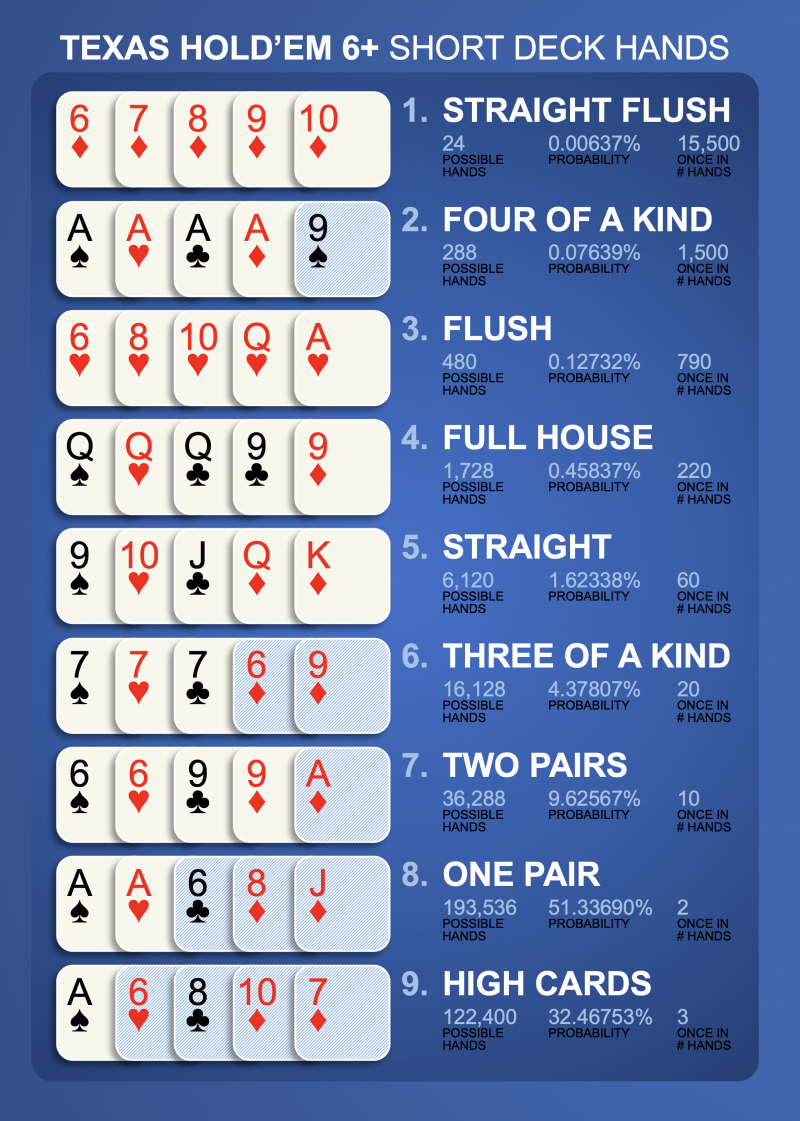
Have been looking for a reference picture for Texas Hold’em 6+ hand rankings and could not find one where there are some odds that come with it and also with easy readability for mobile phone viewing.
So a friend helped to calculate the number of possible hands, probability and also the chances you will get that hand.
I do love doing Microsoft Powerpoint Slides, so this is my latest masterpiece.
With ideas in her head,
she acquires ingredients from creation.
She picks up some bread,
some meats and some crustacean.
With purchases in her hands,
she assembles them into her curation.
Each ingredient has a plan,
that’s all part of her preparation.
She cook in her pots and pans,
dishes of her imagination.
Juggling flavours and textures,
from experience and experimentation.
She host her friends regularly,
not any one group particularly.
With smiles, laughter and her kitchen art,
everyone sense the generosity from her heart.
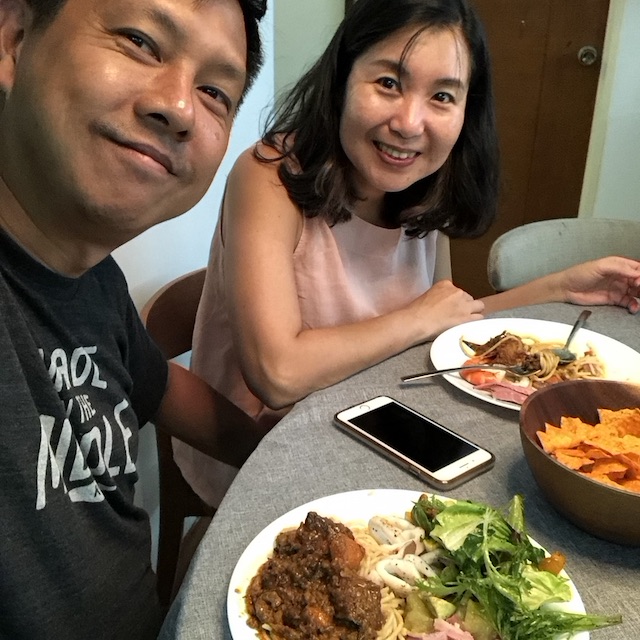
She is the artist, the scientist, the chef, the friend and my wife.
Arya Stark, the headstrong, feisty, independent, young girl turned assassin from Game of Thrones.
Wonder Woman, the fearless, blunt, righteous warrior princess of the amazon from DC.
Thomas Shelby, the ambitious, family oriented, dapper Birmingham gang leader from Peaky Blinders.
Sheldon Cooper, the idiosyncratic, unapologetic, socially challenged genius from Big Bang Theory.
Jake Peralta, the talented and intelligent but childish detective from Brooklyn 99.
Phil Dunphy, the positively enthusiastic who sees himself as the cool dad of 3 from Modern Family.
And the list goes on…
Then it hit me.
Why do we love them so much?
It’s simply because they are who they are as a character and they are consistent. Some characters do evolve, but who they really are is usually consistent deep down and that’s why we like them so much.
As an individual, I’ve been struggling since young in what kind of person I want to be. For everyone that tells me to be myself, there will be others that will tell me to be something else with all the best intentions.
Yes, I really like my aromatic full-bodied red wines and I also enjoy many other varietals, but most importantly it’s the time I get to spend with my friends and family around the table, just having a fun relaxing time over good conversation and company.
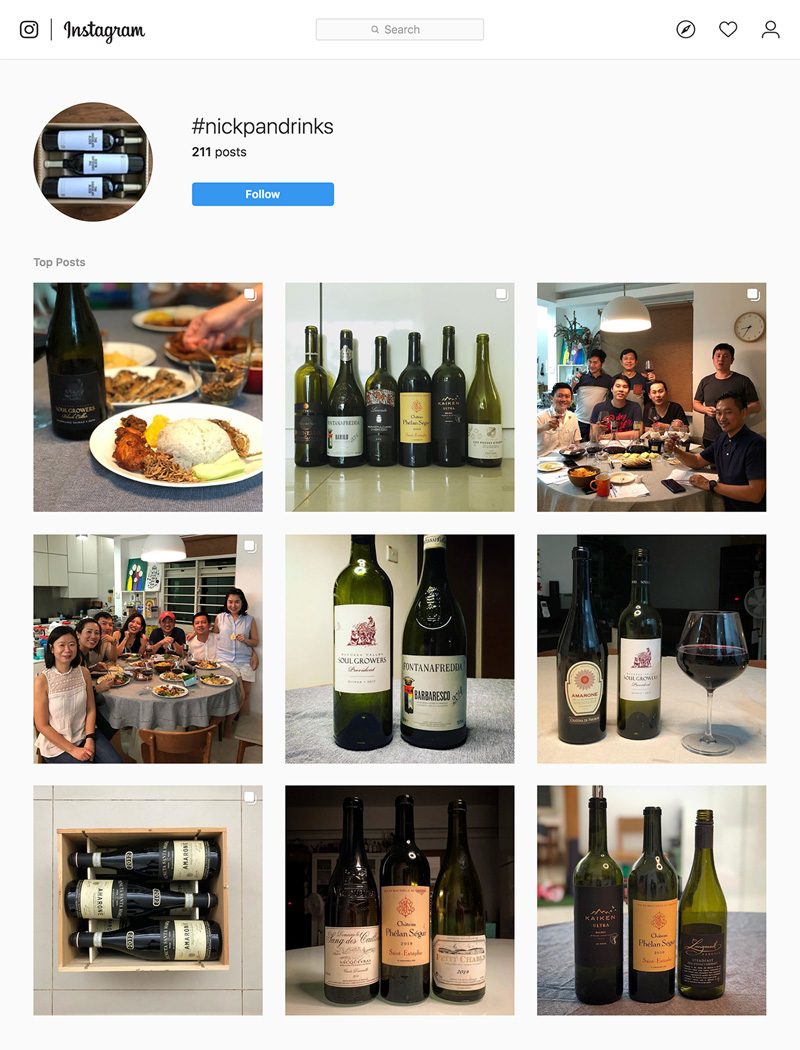
It’s common to see my feed with a record of the bottles we had for the night as I do like to remember what we had. Although I’ve got a Vivino account, nothing beats laying them out, tagging the vineyards and getting their kudos in the comments. ;)
I’ve never been a wine guy before 2015, so how did it all start you might wonder.
It started at a restaurant at Esplanade called Barossa I think around 2014. We were having a steak or wine buffet of sorts. My dear friend Desmond Khoh explained the dynamic chemistry that happens in your mouth when you have a bite of warm juicy beef and a sip of chilled red wine. It was magical and I was hooked. I’m still chasing for that wonderful feeling week after week till this day.
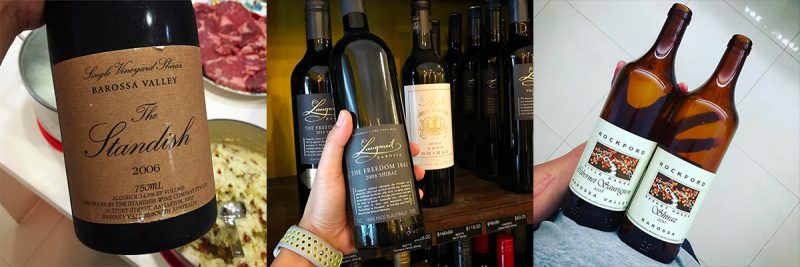
After that day, I started buying wines and was introduced to a few good bottles. They say that every wine lover have a few memorable first bottles that got them hooked and I’ve got 3. They all happen to be your big bold Australian reds.
And yes, sometimes I buy them in cases because they are so so good.
https://www.instagram.com/p/BO918AMj0Pz/
https://www.instagram.com/p/B_wiUEBHXWW/
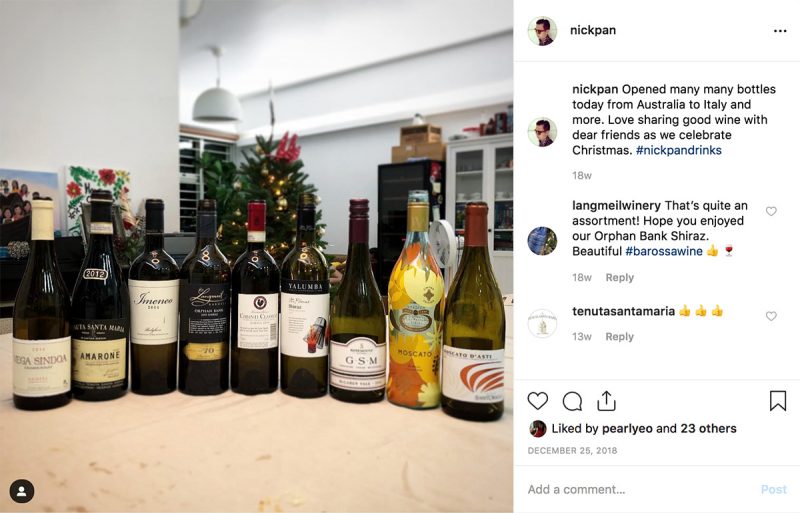
End of 2018, I hosted a blind tasting night with my wine friends and everyone brought a good bottle (> SGD 80) and we tried them all out slowly with 8 decanters out in force.
https://www.instagram.com/p/Br8FLU_hbpt/
We scored them based on individual preferences, favourite bottle gets 3pts, then 2nd best gets 2pts and 3rd best got 1pt. After tabulating the points, these were the results.
Australian Basket Press Rockford Shiraz 2010
Italian Proprieta Sperino ‘L Franc Bandit Vino da Tavola 2010
Italian Le Salette Pergole Vece Amarone della Valpolicella Classico 2012
French Château Gazin L’Hospitalet de Gazin Pomerol 2005
French E. Guigal Côtes du Rhône Blanc 2014
French Château Plince Pomerol 2013
It was a great epic night. And I found a good use for our SAF army issued socks.
https://www.instagram.com/p/BpJ5QBOh_Ce/
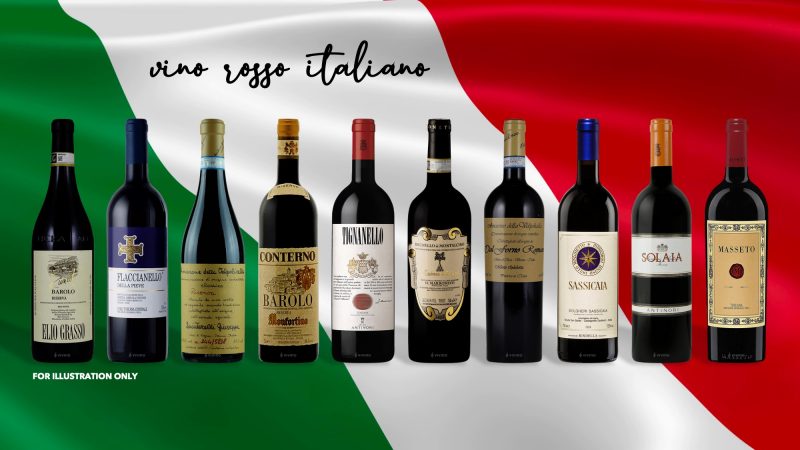
Ever since then, we are having more of such sessions. We had a “The Americas” night and “Australian” night, soon we will be doing the “Italian” night before venturing into French.
https://www.instagram.com/p/B839pGjn–m/
The Americas Night of Feb 2020
https://www.instagram.com/p/B9Jm9yKHoP8/
Australian Night of Feb 2020Our planned Italian Night after it is safe to gather when COVID-19 stabilises
I’m also starting to train my daughter how to appreciate wine and being a teen, she do like the sweet ones. She can now do 5 – 7 serves, not bad. But we only do that during Christmas or Chinese New year big parties.
https://www.instagram.com/p/BVzgZh1Fxl9/
Gotta train daughters to know wine and how to control.
https://www.instagram.com/p/B_KQAE1nc34/
Blessed weekends by the wife.
So the natural question people ask me is which wine is good and where to buy good wine. I’m honestly no expert, just an enthusiast at best, but let me try to answer the best as I can.
Good Wine really depends on what you like. Some like light wines like your Pinot Noir, Merlot and some like full-bodied like your Malbec, Shiraz / Syrah, CDP (Châteauneuf-du-Pape). Some like them sweet, some like them dry. Some like them with food, some like them for fun. So you need to first drink enough different types of wine in order to know what you like. You might want to try reading up as well. I would recommend checking out Wine Folly which is a very easy read and lots of information for reference, you can also check out their website winefolly.com and Instagram account @winefolly. Another nice book I got was Wine it’s not rocket science. Maybe go region by region? My journey so far have been Australian with a mix of South American then lots and lots of Italian then now French, I’ve yet to really dive into Americans, Spanish, Portuguese and South African which I’m also very interested in.
Now, where then do you buy good wine? This is a tricky one as buying a good bottle is a bit like a hunt. You got to find them, check out their ratings and description, buy them to try them, then will you know if you found a good bottle, then find a supplier that can get you the best possible price and in cases of 6 or 12 if you really like them. A good bottle does not mean expensive, good value is also important. I do have friends with exquisite tastes ordering bottles below SGD 30 by cases because they are of good value, while others camp on online stores to wait for sales of bottles that go for SGD 90. I personally shop between SGD 50 – SGD 100 for regular drinking and good deals < SGD 150 and some really legendary bottles with great vintage to keep if they are < $400.
How then do you do research on wines? I use the Vivino app to check ratings and details of the bottles. Just keep in mind that reviews and ratings are subjective, however the number of ratings do give you a sense of how popular or widely available the wine is. To maintain a > 4.0 rating over 200 ratings I think should be quite a good bottle. Also I use wine-searcher.com to find which merchants sell a specific wine I’m looking for. Do you know there are more than 140 over wine merchants in Singapore!! Another great resource is jancisrobinson.com (paid resource) which a dear friend Robby swears by as well. You can also join Facebook Groups like Wine Loves in Singapore to get to know more people and many of them always share lots of promos.
vivino.com <- yes you can buy directly from Vivino too.
If you buy wine from somewhere else, do let me know where and what good stuff you’ve found.
Anyway, I really would love to connect with more wine lovers in Singapore online and hence created this new Facebook Group called “Little Red Drop“. A strictly non commercial group to discuss about wine and make friends in Singapore who love wine . It is NOT about sales, promos or anything commercial.
Little Red Drop Facebook Group Est. 2020
Also did a bit of an experiment just recently to try an automatically pipe wine email newsletters and promos I get tp be published in a purpose build Facebook Page which I’m calling “Singapore Wine Mailing Lists” what a boring name I know, but its for a specific function and not a place to make friends.
Singapore Wine Mailing List Facebook Page
Anyway, as of right now I think I’ve went kinda crazy with buying good wines to keep after realising how much good bottles of great vintage (eg. 2016 French) appreciates, so better buy now and keep so can enjoy in the future.
https://www.instagram.com/p/B-b6JqKHtYc/
I hope this post helps you along in your wine adventures and if you got any questions or would love to chat about wine or just get to know more people who are into wine, join us over at the Little Red Drop on Facebook.
To motivate myself towards a more sustainable future especially in terms of transportation, here are a few more beautiful pictures of Electric Vans by Arrival which will be adopted by the the Royal Mail in UK and UPS in London and Paris.
Photo: ArrivalPhoto: ArrivalPhoto: UPS
Too beautiful right? And knowing that they have zero emissions makes them even more beautiful.