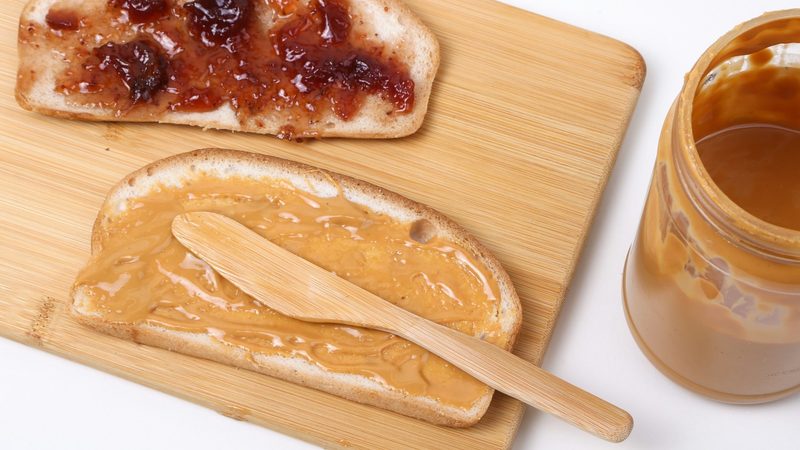
Have you seen that viral video where a dad asks his kids to write step-by-step instructions for making a peanut butter and jelly sandwich?
If you haven’t, it’s worth a quick watch:
The premise is super simple. The kids write down steps like “put the peanut butter on the bread.” So the dad takes the closed jar of peanut butter and physically places the whole jar right on top of a slice of bread.
The kids scream, “No! Open the jar and spread it with a knife!”
So he opens the jar, takes the knife, and rubs the handle covered in peanut butter onto the loaf.
It is hilarious, but if you work in agency strategy, it also hits a little too close to home.
The dad isn’t being difficult; he’s just following their instructions literally. He is acting like a computer program. And honestly, that is exactly how Generative AI works today.
Why Does AI Give Generic Strategy Answers?
Working in a global advertising and marketing agency, I’ve been thinking a lot about where strategists fit in this new AI-driven landscape.
There is a common worry floating around our industry: Will AI replace agency strategists?
Personally, I don’t think so. But I do think AI is holding up a giant mirror to the quality of our briefs.
When we type a quick, vague prompt into an AI tool and get back a generic, boring response, our immediate reaction is often: “See? AI isn’t that smart. It can’t replace real strategy.”
But if we are honest with ourselves… did we give it a good instruction, or did we just tell it to “put peanut butter on the bread”?
AI models don’t know your client’s business context unless you feed it. They don’t know the quiet human tension behind a campaign unless you articulate it. They don’t know what “good” looks like unless you define the constraints.
If we give AI a lazy, broad prompt, we get back a generic, surface-level answer. Garbage in, garbage out.
What Is AI’s True Role in Strategy?
I don’t look at AI as something that will do the core strategy for us. Strategy requires human empathy, cultural intuition, and the ability to connect dots that shouldn’t make sense on paper. AI doesn’t have a heart or a gut feeling.
Instead, think of AI as a strategy companion.
It’s like having a super fast, tireless junior researcher sitting next to you. It can help you:
- Poke holes in logic: Identify missing assumptions in campaign hypotheses.
- Brainstorm alternative angles: Explore unconventional audience archetypes quickly.
- Organize unstructured data: Synthesize qualitative research notes in seconds.
- Internet fueled out of box thinking: Share with us things we have not thought about.
But for any strategic companion to be helpful, you have to talk to it clearly. This brings us back to the core craft of a great strategist: precision briefing.
How to Practice Precision Briefing for AI Prompts
In agency life, writing a brief has always been an art form. The best briefs aren’t long, bloated documents filled with corporate jargon. The best briefs are simple, razor-sharp, and painfully clear. They make the complex simple.
And now, with AI in our daily workflow, prompting is simply briefing in a new medium.
Here is the difference between a generic prompt and a precision brief:
- Generic Prompt: “Give me target audience insights for young adults buying running shoes.”
- Precision Brief: “We are looking at urban working adults aged 22–28 who feel guilty about spending money on premium running shoes because they only run twice a week. What are the emotional barriers stopping them, and what quiet motivations make them feel justified in buying?”
When you brief AI with that level of context, nuance, and constraint, the output stops feeling like a Wikipedia summary. It starts feeling like a genuine spark for deeper human insight.
Key Takeaways for Agency Strategists
- Prompting IS Briefing: Prompting isn’t a technical coding skill; it’s an exercise in clear thinking and exact language.
- AI as a Strategy Companion: AI works best as a collaborative sounding board, not an automated strategist.
- Precision In, Clarity Out: The quality of AI output directly reflects the precision of the context and constraints provided in your prompt.
Looking Ahead: The Future of Strategic Craft
Technology changes every few years. Yesterday it was social algorithms, today it’s generative AI, and tomorrow it will be something else entirely.
We don’t need to fear these tools, nor should we expect them to do the heavy lifting for us.
Instead, let’s use this moment to get back to the fundamentals of good strategy: clear thinking, sharp observation, and simple communication.
Let’s practice writing better briefs—not just for our creative teams, but for our AI companions too. The clearer we can express what we are looking for, the better our tools can help us, and the better our final work will be for our clients and teams.
Keep practicing, keep prompting, and let’s keep sharpening our craft together.