
There is a natural human tendency, when faced with tragedy or the unknown, to look for a narrative.
When a natural disaster strikes, when an economic crisis hits, or when an individual faces a devastating mistake or unfortunate incident, we instinctively try to categorize it. We label events as “bad luck.” We chalk misfortunes up to “fate,” the “will of God,” or in some cases “evil” or “spiritual warfare”. We write off what we don’t understand as spiritual mystery, and in doing so, we unwittingly surrender our agency. We stop asking how and why, and instead settle for it-is-what-it-is.
For thousands of years, this was a survival mechanism. It gave us comfort in a world where we had very little control over our environment.
But if the story of human civilization has taught us anything, from the way natural selection shapes life to the way we learn, innovate, and build, it’s that we are not passive passengers in this universe. The ones that progress survives and maybe even thrive, those that don’t gets left behind and eventually fade away.
We need to stop dwelling in our failures or hiding behind supernatural explanations, and instead double down on our greatest superpower: relentless, cooperative curiosity.
Failure Isn’t a Judgement, It’s Feedback
When an engineer tests a rocket and it explodes on the pad, they don’t call it “spiritual warfare”. They don’t throw their hands up and claim the laws of physics were cursing them or that it was not a good day according to the Tong Shu Almanac or that the Feng Shui of the pad was wrong or that it was clearly inauspicious to launch rockets.
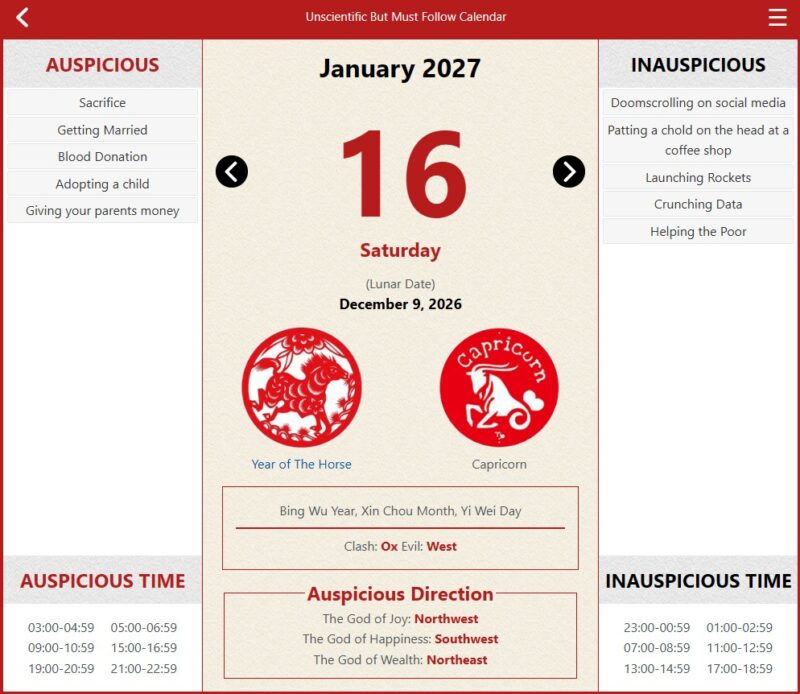
They don’t do all that and their bosses will not give them any budget to do that. Instead, they examine the telemetry. They look at the data. They isolate the valve that failed, redesign it, and build a better system.
In science and engineering, a failure isn’t a moral judgment, it’s data. It’s the universe telling us, “That specific approach didn’t work. Try again with another variable.”
Yet, as a society, we rarely treat human mistakes or natural disasters with that same analytical grace. When geopolitical conflicts flare, when economic systems buckle, or when personal failures occur, we dwell in blame, shame, and ideological division.
If we applied the scientific method to our societal problems, viewing failures as mere feedback loops rather than fatal flaws, everything would change. Unfortunate disasters, whether natural or man-made, shouldn’t be accepted as inevitable suffering. They are invitations to figure out how to prevent them, adapt, and come out stronger on the other side.
The next 12 months, we are expecting the 2027 super El Nino, its either we make preparations and study how to prevent future occurrence or we can just say the Gods must be angry with humans and that we need to give a sacrifice to Zeus, the supreme deity of the Greek pantheon, the sky and thunder God who rules as king of the Gods on Mount Olympus, child of Cronus and Rhea. Sounds funny you say? But those were the beliefs of the wisest humans back in the day. Maybe in a few hundred years, our descendants will look at us with a similar unbelief that we actually use something like the Tong Shu to direct our lives.
Replacing Mystery with Science and Collaboration
Writing off the unknown as a spiritual mystery might feel comforting, but it halts progress. Every major breakthrough in human history, from eradicating diseases to harnessing electricity happened because someone refused to accept the unknown as unknowable. They were curious enough to seek the truth through observation, evidence, and science.
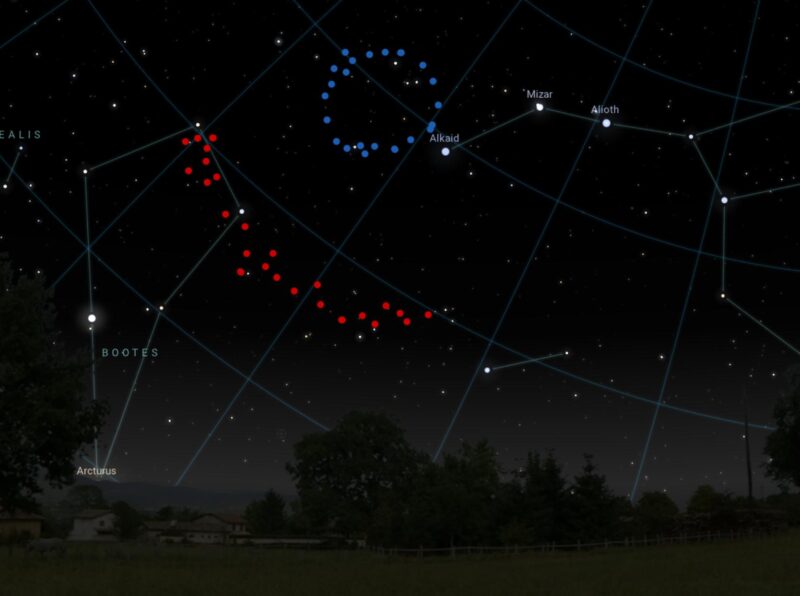
Imagine what happens when we scale that curiosity across the entire human race.
Right now, so much of our global energy is fragmented. We fight over artificially scarce resources, build walls around our intellectual property, and trap ourselves in zero-sum geopolitical games.
If we redirected even a fraction of that energy, that human capability toward solving fundamental problems as one unified human race, the progress wouldn’t just be linear—it would be exponential.
- Scarcity is a solved problem waiting for better execution. We have the fundamental physics and intelligence to unlock clean, abundant energy (fusion, advanced solar, next-gen grids) and feed every human on Earth through automated agriculture and biotechnology.
- Societal division is an alignment problem. Most geopolitical friction stems from competition over resources and fear of the unknown. When we solve energy, health, and education, the root causes of major conflicts begin to dissolve.
A World Beyond the Capitalistic Grind
Why does all of this matter? Why push for exponential progress?
It’s not just about building sleeker tech or living longer. It’s about liberating human potential.
In our current capitalistic framework, millions, if not billions of brilliant human minds spend their waking hours stuck in survival mode. They work jobs they don’t love, driven by the individual economic pressure to afford food, shelter, and healthcare. Imagine the potential scientific theories, art, literature, and inventions we lose every day simply because people don’t have the space to pursue their passions.
When we use science, technology, and collective cooperation to eliminate scarcity, we dismantle that survival pressure. We unlock a world where people can spend their waking hours embracing their true curiosities. Where you choose how you want to contribute to society and not because a paycheck dictates it, but because you are genuinely excited to help solve a puzzle, solve a worthy problem, create art, or push the boundaries of human knowledge.
Moving Forward as One Race
Progress isn’t guaranteed, and it doesn’t happen by accident. It is a conscious choice.
We can choose to remain divided, labeling our setbacks as “bad luck” or “fate,” and letting fear dictate our future. Or we can choose to be curious. We can choose to embrace failure as the price of iteration, look at disaster as a challenge to engineering better systems, and view every human on this planet as a teammate rather than a competitor.
The universe is vast, complex, and full of unsolved mysteries. Let’s pool our resources together and let’s start picking a few and solving them together.