Brands surfing trends? or shaping the future?

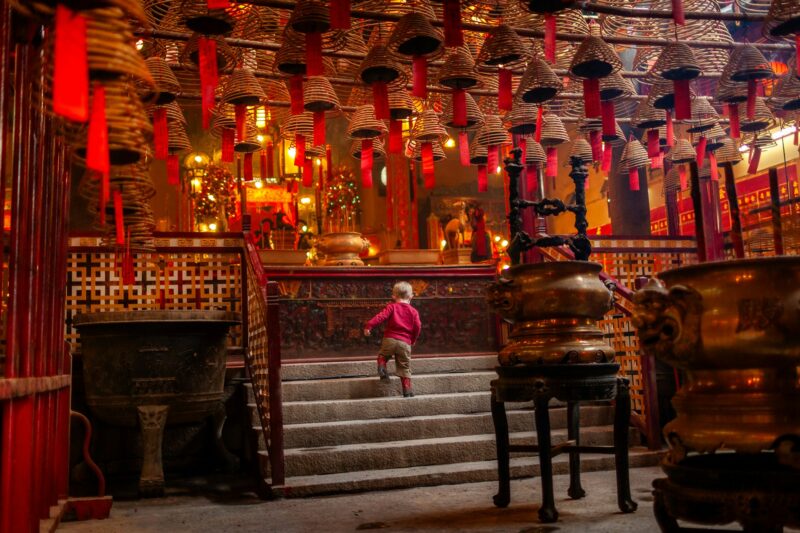
Photo by Lucrezia Carnelos on Unsplash

I need to get this out of my system… so bear with me…

“Customer Centricity”. I’m honestly quite tired of hearing this. Maybe because I believe humans are irrational. Maybe because I think we as consumers don’t know what’s best for ourselves.

The consumer landscape is a dynamic, ever-shifting mosaic of desires, ethical demands, and technological expectations. Every brand, whether a global titan or an agile startup, stands at a critical strategic crossroads: should brands constantly respond to what consumers currently want, or should brands boldly endeavour to shape the future they believe in, leading consumers towards it?

This isn’t merely a business strategy question; it’s a fundamental choice that will determine not just market share, but potentially, the very trajectory of our collective “better future” as a human race.

Let’s explore this divide as it’s been on my mind a lot of late while responding to proposals or developing strategies to drive growth for brands.

The Responsive Brand: Mastering the Art of the Present

Many brands are experts at navigating the here and now. They are the astute surfers of consumer waves, their well invested R&D and innovation teams have finely tuned sensors, detecting every ripple from the surging demand for sustainable packaging and hyper-personalisation, to the integration of AI into daily life. Their market intelligence is impeccable, their agility unmatched.

Their strength lies in immediate relevance and reduced risk. They deliver what consumers are explicitly asking for, minimising speculation, recommendations backed by empirical data. We see this in the rapid proliferation of plant-based or organic options in every grocery store, the explosion of niche products and services in respond to the niche segment of needs and wants, algorithmic recommendations while you doom-scroll that maximise profit margins, the constant software updates that addresses the latest privacy concerns or introduction of generative AI features in every daily app even needed or not. They optimise existing paradigms, making them smoother, more efficient, and more palatable for the current consumer.

But here’s the critical question: does expertly reacting to current desires truly build a better future, or does it merely perpetuate and refine the existing one? While essential for market health and meeting immediate needs, this approach leads to incremental improvements rather than transformative leaps. It risks being derivative, focused on short-term gains, and potentially missing the deeper, unspoken societal needs that lie beneath the surface of popular culture. Worse, it drives our human race into ground, unhealthy, unmotivated, easily manipulated like sheep being lead to the slaughter.

The Visionary Brand: Building Tomorrow, Today

Then there are brands driven by a deep conviction, an almost prophetic perspective on how the world should be. These organisations aren’t just listening to consumers; they’re trying to educate them, inspire them, and ultimately, change their behaviour to align with a preferred future.

Think of the pioneers of electric vehicles, long before climate change was a mainstream concern for every household. Or companies investing in lab-grown meats or alternative source of proteins when the market was barely a whisper. Consider brands developing immersive virtual and augmented realities, not just as entertainment, but as platforms for entirely new forms of work, education, and social connection. Their products and services are often conceived not from a focus group, but from a profound belief in what’s possible and necessary.

Their strength lies in disruption, innovation, and long-term impact. They are willing to take significant risks, invest heavily in R&D, and embark on extensive educational campaigns to bring consumers along on their journey. They create new markets, establish new norms, and often, their initial offerings are met with skepticism before becoming the gold standard. When successful, these visionary brands don’t just participate in the future; they define it, often leading to profound societal benefits, from environmental sustainability to health advancements.

Think Patagonia (sustainability), think Tesla (energy & transportation), think Impossible Foods (ending the era of animal-based agriculture)…

However, this path is fraught with challenges: immense capital investment, significant consumer inertia, the risk of misjudging the future, and the long, arduous process of shifting ingrained habits.

Towards a Truly Better Tomorrow: A Call to Action

This distinction isn’t about declaring one approach inherently superior. Both play crucial roles. Responsive brands ensure that our journey is comfortable and that visionary breakthroughs are integrated seamlessly. Visionary brands, however, are the cartographers of new territories, daring to imagine and build paths we didn’t even know we needed.

The real challenge for us, as business leaders, innovators, and consumers, is to discern: Which brands are truly advancing the needle towards a better tomorrow?

  • Is a “better future” simply one where our current desires are perfectly met and seamlessly optimised? Or is it one where fundamental challenges, climate change, inequality, resource scarcity, digital well-being are confronted head-on by audacious visions?
  • Do we, as consumers, inadvertently empower brands that merely give us more of what we already consume, or do we reward those that challenge us to think differently, act differently, and aspire to a more sustainable, equitable, and fulfilling existence?
  • How can we, as a business community, foster an environment where bold, future-shaping convictions are not only celebrated but economically viable, even when they push us out of our comfort zones?

Perhaps the most potent combination for a truly better future lies in synergy… visionary brands daring to dream and build, coupled with responsive brands rapidly integrating and democratising those innovations once their path is proven. This interplay creates a dynamic tension that can drive genuine, sustainable progress.

Let’s open the conversation:

What role do you believe brands should play in shaping our future? Are we, as consumers, too focused on immediate gratification to truly support the long-term visionaries? And ultimately, how do we encourage more brands to not just react to the tide, but to help steer our Human race towards a truly better tomorrow?


Oh man… how I wish I can work on more Visionary Brands.

#Branding #Innovation #ConsumerTrends #Leadership #Strategy #Sustainability #Marketing #BusinessStrategy #FutureBuilding #VisionaryLeadership #ConsumerBehavior

Finding Our Own Rhythm in the Year of the Fire Horse as Our Beliefs Shapes our Actions

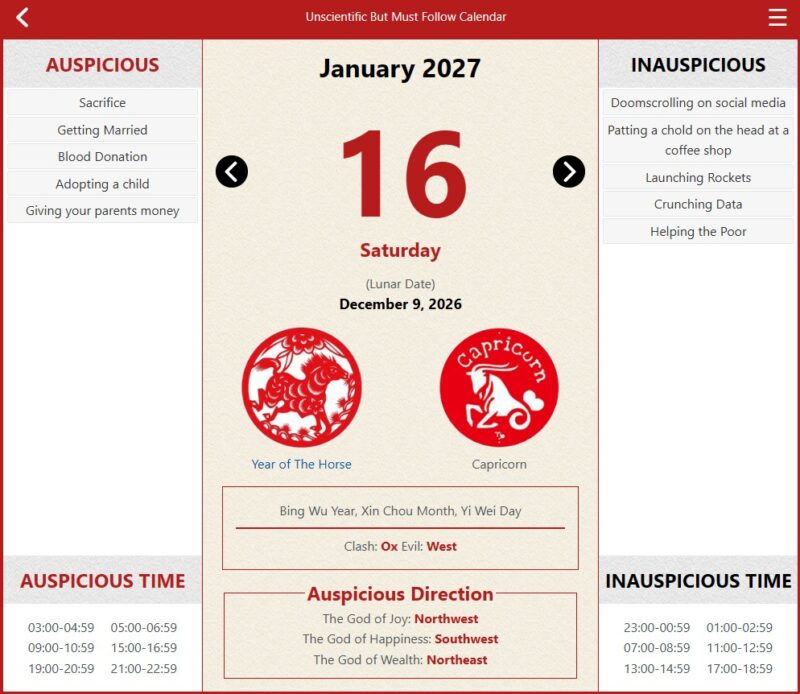
As CNY approaches, we stand on the precipice of the Year of the Fire Horse, there is a familiar electricity in the air. 2026 arrives with a reputation for intensity, a blend of the Horse’s restless spirit and the transformative power of Fire. During office lunches and family dinners, the conversation inevitably drifts toward the “forecasts.” We hear whispers of volatility, warnings of economic shifts, and a dizzying array of advice from masters that often contradicts the one we heard just an hour prior.

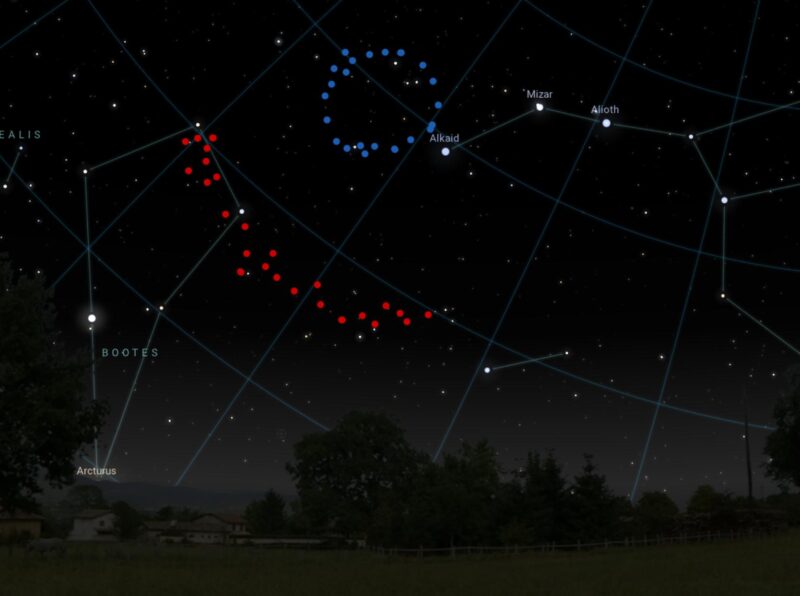
It is natural to seek a map when the fog of global uncertainty feels thick. We want someone to tell us when to run and where to hide. But perhaps the most profound mystery of the universe isn’t hidden in the stars, it is hidden in our own beliefs.

The Architecture of Our Reality

There is a simple, yet radical truth: Our beliefs are the blueprints for our future. Science and philosophy often agree that our mindset acts as a filter. When we believe the world is a place of scarcity and impending doom, our brains become hyper-attuned to threats, causing us to shrink, hesitate, and miss the very opportunities that could save us. Conversely, when we choose to believe in a positive future, we aren’t just “wishing”, we are recalibrating our internal compass.

“The stars do not change their positions based on our hope, but our hope changes how we navigate by the stars.”

By choosing an optimistic outlook, we:

  • Identify hidden paths: A hopeful mind is a creative one, seeing solutions where a fearful mind only sees walls.
  • Fuel collective action: Hope is contagious. When we act as if a better world is possible, we inspire those around us to build it with us.
  • Maintain internal peace: While we cannot control the “weather” of global geopolitics, we are the absolute masters of our own “climate.”

The Fire Horse: A Symbol of Momentum, Not Fear

In traditional symbolism, the Horse is often associated with “Ma Dao Cheng Gong” (马到成功), success the moment the horse arrives. It represents a year of bold movement and breakthroughs. Instead of viewing this “fire” as something that consumes, let us view it as the spark of innovation and the warmth of human connection.

The conflicting advice of the day serves as a reminder that no one possesses a singular key to your life. You are the only one living it. If the forecasts bring you comfort, take the bits that inspire you and leave the rest behind. Use the energy of the Horse not to gallop away from challenges, but to charge toward the version of the future you want to see.

A Humble Call to Action

We don’t need to know exactly what lies in store to decide how we will show up. Let us walk into 2026 with a humble heart and fierce optimism. Let us decide, right now, that regardless of the economic indices or the headlines, how the cryptos rally or the stocks plunges, we will be the architects of kindness, the drivers of progress, and the keepers of hope.

The future is not a destination we are traveling toward; it is a reality we are creating with every thought we hold and every action we take.

Let’s believe in a beautiful 2026. And then, let’s go out and make it so.

The Human Bell Curve: A Mirror to Our Interactions

You know… sometimes I find myself observing people, and a thought keeps circling in my mind – a bit like how we all fit somewhere on a “spectrum”. Not just any spectrum, but what I like to call the “Human Bell Curve.” It’s a bit of a weird way to look at things, but thats just how my mind works, so pls bear with me.

On one far end, we have those truly angelic souls, the ones who are so genuinely good, kind, and generous that they almost shimmer. Selfless, always putting others first. The kind of people you just feel better being around. And then, at the other extreme, you find the truly self-centered, mean, and, dare I say, terrible individuals. The ones who drain your energy and make you wonder about humanity. I’m sure you can bucket a few people you know into one of these 2 category.

We often imagine these extremes are rare, just a handful of saints and a few devils. But what if we applied the statistical elegance of a bell curve to human nature? What if we truly understood where most of us land on this curve, and what that implies for our daily interactions? It’s a perspective shift that could genuinely change how we see the faces passing us by.

Let’s be honest, statistically speaking, most of us are probably right smack in the middle. Not Mother Teresa, not a supervillain, just… us. If that’s the case, think about it: there are roughly 50% of people “nicer” than us, and – a slightly more sobering thought – 50% who are “more challenging” or “less nice” than us. It means there’s a significant chunk of folks out there we need to learn to navigate with patience and grace. And for those wonderful souls on the nicer side? We really should be more actively thankful, shouldn’t we? A little appreciation goes a long way.


Now, imagine you’re one of the truly kind ones, perhaps in the upper echelons of this curve, with 80% of the population being “less nice” than you. That’s a lot of people! But here’s the beautiful paradox: because you possess that inherent kindness and empathy, you’re more likely to understand why people behave the way they do. You might see their struggles, their insecurities, their pain, and find it in your heart to forgive, to extend grace rather than judgment. It’s a silent superpower, that empathy.

And what about those at the other end, perhaps 80% are “nicer” than them? Well, if you’re operating from a place of meanness or selfishness, the concept of a bell curve probably doesn’t even cross your mind. You’re simply doing what you want, when you want, without much thought for the ripple effects. The lack of empathy means a lack of caring about where you stand or how others perceive you.


This isn’t about making a grand statement or pointing fingers. It’s just an observation, a lens through which to view the beautiful, messy tapestry of human interaction. It’s about cultivating an understanding and an awareness of where we, and others, might sit on this grand curve. And perhaps, just perhaps, this awareness helps us understand ourselves a little better, and gently guides us towards how we might choose to be in the world.

For the empathetic heart, this bell curve isn’t just a statistical model, but a whisper of potential. While the math might tell us where we are, I’m not one to let numbers fully dictate how life will turn out. Maybe, just maybe, if we each lean a little more into kindness, into generosity, we can collectively nudge that curve. We can all be part of a gentle, hopeful shift, moving the whole of humanity just a little bit further towards the good side. What if we all tried…

A Call for a Different Kind of Power

Louis at TedxSingapore 13 Sep 2025

I attended my youngest brother’s Ted talk last Saturday (13 Sep 2025) in Singapore and I’m so proud of him as he has dedicated his life to Nurturing youth into adults that live with a passion to achieve personal aspirations by founding Praxium more than a decade ago. He is such a talent and has such a focused mission in his life and how I wish he gets a solid patron to let him does what he does which is such an important thing for our youths and society.

Just attending his talk stirred lots of thoughts and reignited something I’ve been thinking of for quite some time. What if the people with the most power and wealth were also the ones driven by the deepest sense of purpose to do good? It’s a question I’ve been wrestling with, and it seems to get to the heart of a pretty significant disconnect in our world.

On one side, you have the powerful and the rich—the movers and shakers. Whether it’s in business, politics, or finance, they hold the keys to incredible resources and influence. But let’s be honest, we often see their focus tilted heavily towards self-interest and profit. The headlines are full of stories about deals that benefit the few, and decisions made without much thought for the collective good.

On the other side are the idealists—the activists, the non-profit founders, the volunteers. These are the people who are fueled by a passionate desire to make the world a better place. They work tirelessly to fix problems, lift up communities, and fight for what’s right. Yet, so many of them struggle for funding, lack influence, and find themselves operating on the fringes of power.

The result is a chasm. The people who can make the biggest changes are often focused on personal gain, and the people who want to make the biggest changes often lack the means to do so. The overlap—that rare individual who is both powerful and profoundly selfless—is so small you’d need a magnifying glass to find it. But what if we made that overlap bigger? What if we could close the gap?

I believe we need a new kind of social contract. We need more powerful and wealthy people to embrace a higher purpose, and we need more idealists to learn how to build power and wealth to amplify their impact.

So, how do we make this happen? It won’t be easy, but we can start by doing a few key things.


For the Powerful and Rich

It’s time to redefine success. It’s not just about the size of your portfolio or the number of people who report to you. True success should include the positive impact you have on the world.

  • Integrate purpose into profit. Look for opportunities where doing good and doing well are one and the same. Invest in sustainable companies, fund social enterprises, or create products that solve real-world problems. Your influence can shape entire industries.
  • Mentor idealists. Find those passionate, purpose-driven people and use your network, capital, and expertise to help them scale their efforts. You have the business acumen they need to turn a great idea into a lasting movement.
  • Advocate for systemic change. Use your political and economic power to push for policies that create a more just and equitable society. Don’t just give money to charity; work to fix the systems that create the need for charity in the first place.

For the Idealists and Change-makers

Your idealism is your greatest asset, but to achieve your goals, you need to think strategically about power.

  • Learn to build a business model. Whether you’re a non-profit or a social enterprise, a strong, sustainable financial model is what will allow your mission to thrive beyond a single project. Think like an entrepreneur, not just an activist.
  • Master the art of influence. Understand how power works in your field, whether it’s through policy, media, or community organizing. Learn to tell your story in a way that resonates with those who have resources and influence.
  • Embrace collaboration. Find powerful allies in business and government who share your vision. Don’t see them as the enemy; see them as partners who can provide the resources and leverage you need to succeed.

Imagine what we could achieve if the powerful and the selfless were one and the same. It’s a vision of a world where profit and purpose are partners, not rivals. And it’s a future worth fighting for.


If you had read this far and is indeed rich and powerful, would you be keen to support a meaningful purpose by helping youths discover and achieve their aspirations? Too many times we have seen young people with so much passion only to grow up living life in a dead end job just to pay bills, put food on the table and go for holidays without passion in life. If you as keen to fuel this mission, let me know. I can connect Louis at Praxium with you.

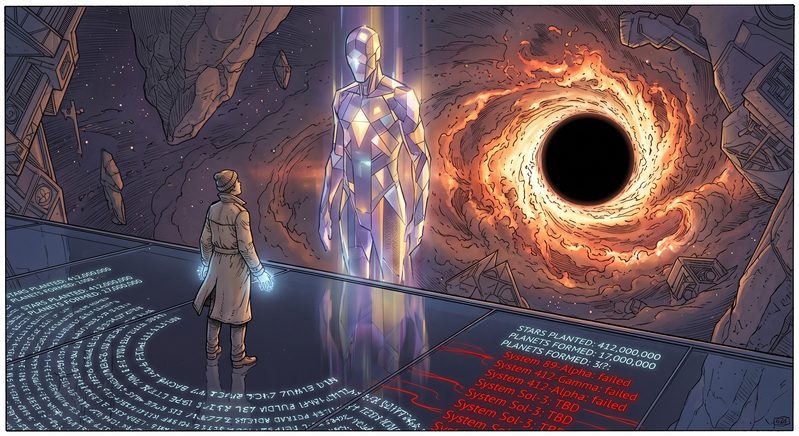
The Nursery of Light

We’ve stared at the stars for lifetimes,
Sent signals, spun theories, lit fires in the dark—
But the universe stayed silent.
Not because it’s empty.
But because it’s watching.

See, maybe we aren’t alone.
Maybe we’re just… not ready.

Maybe this—
this fragile little world spinning in the void—
is a nursery.
A sanctuary for young civilizations,
where the first test is simple,
and eternal.

Will we choose life or death?
Light or darkness?
Creation or destruction?

Every choice we make,
every war, every act of mercy,
pushes us closer to our truth.

And in the echoes of ancient words,
passed down through prophets and poets,
there’s a voice still calling:

“I am the way, the truth, and the life.”

Not a closed door, but an invitation.
Not a rulebook, but a resonance.
A frequency the universe has been humming all along.

Life.
Truth.
The Way.

See, light and dark—
they can’t share the same space.
It’s binary at its core.
Either we nurture life, or we destroy it.
Either we rise, or we fall.
Either we grow, or we wither.

It’s like the universe is holding its breath,
waiting to see:

Will we rise above fear?
Or drown in it?

Will we reach for the stars with open hands?
Or clench our fists and burn ourselves to ash?

And maybe, just maybe,
when enough hearts choose peace over pride,
kindness over conquest,
growth over greed—

That veil of silence will tear open.

And beyond the stars,
civilizations ancient and gentle,
who’ve passed their own tests,
will step out from the shadows and say:

“Welcome.”

“You’ve grown.”

And in that moment,
life wins.
Light wins.

But until then,
this nursery remains.
The test continues.
And the choice…
is still ours.

~ nickpan in collab with solenne